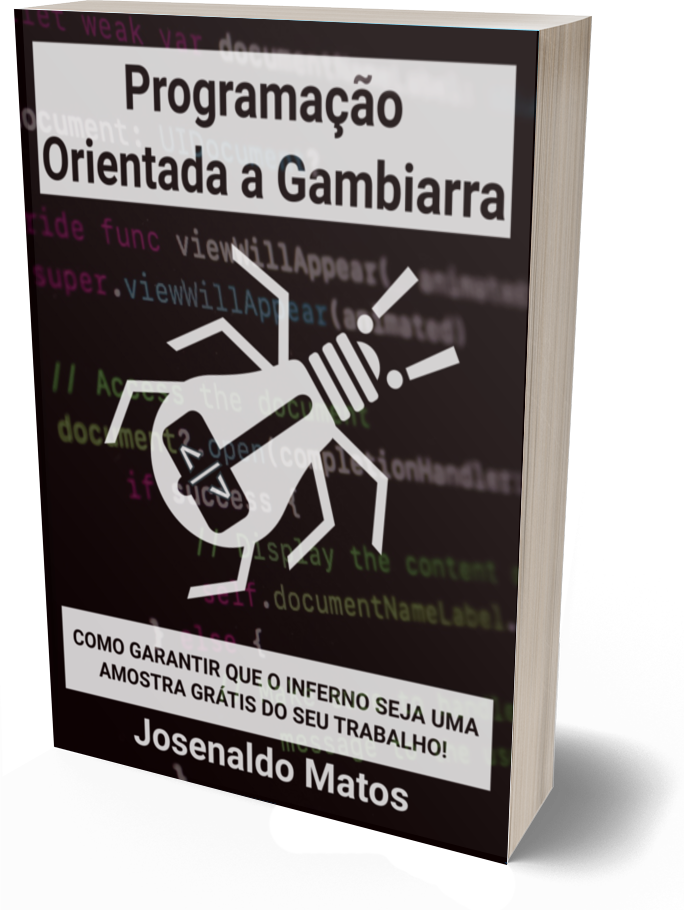
The first draft of Programação Orientada a Gambiarra
A short update on my first complete draft, and what this book is really about.I just finished the first complete draft of Programação Orientada a Gambiarra - https://livropog.com.br/.
If you’re not Brazilian, the word gambiarra might sound mysterious. It’s the kind of improvised fix you do when reality doesn’t match the plan: a workaround, a hack, a duct-tape solution. It can be brilliant, dangerous, embarrassing, or all of the above.
This book is not a celebration of messy code. It’s an attempt to describe something we all do (especially under deadlines): we bend constraints. The core idea is simple: a “gambiarra” becomes less harmful when it is oriented—when you treat it as a deliberate design decision with context, boundaries, and a cleanup strategy.
In the draft, I try to answer questions like:
- When is a shortcut acceptable, and when is it just technical debt disguised as courage?
- How do you document a workaround so the next person doesn’t turn it into a permanent architecture?
- What makes a quick fix safe enough to ship, and what makes it a production incident waiting to happen?
You’ll find stories and patterns: how to create “escape hatches” without turning your system into a maze, how to choose the smallest change that reduces risk, and how to communicate trade-offs without guilt-tripping yourself or your team.
The first draft is rough, but it’s complete. Now comes the hard part: cutting fluff, tightening examples, and making sure every chapter helps you build software that survives reality—without pretending reality is tidy.